
Panama Foundations as a DAO Wrapper: a practical guide for Web3 founders and lawyers
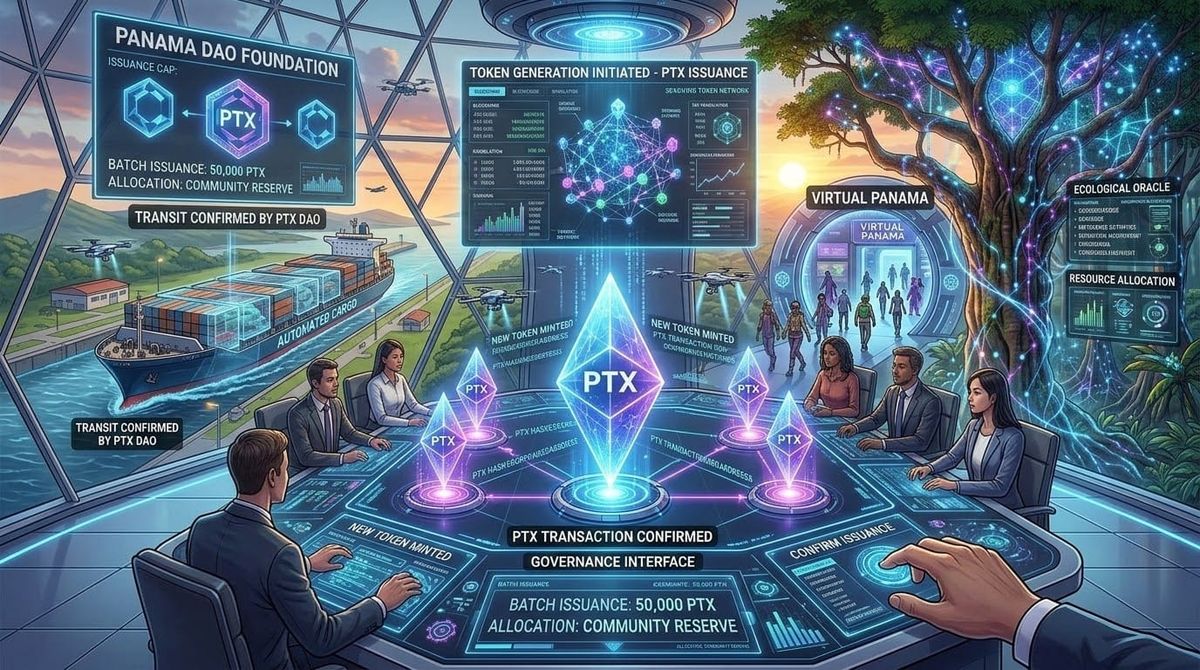
As decentralised autonomous organisations (DAOs) evolve from informal governance experiments into capitalised, revenue-generating ecosystems, a fundamental issue continues to surface - in and of themselves, DAOs are not legal persons. As a result, they cannot contract, hold assets in their own name, or meaningfully limit liability. This creates a structural disconnect between on-chain governance systems and the off-chain legal world in which counterparties, regulators, and courts operate.
To address this, Web3 founders increasingly turn to legal wrappers. While Cayman foundation companies have become the most visible option, Panama private interest foundations (PIFs) are emerging as a leaner, more cost-effective alternative, particularly for early-stage and crypto-native projects.
This article explores Panama foundations as a DAO wrapper in depth: what they are, why they are used, how they function in practice, how they compare to Cayman structures, and how founders are using them both within and beyond DAO contexts. According to the DAO SPV typology of DAOs, the Panama foundation is best regarded as a ‘ DAO plug’ - it is a DAO semi-wrapper. To learn more about these points, keep reading.
Interested in setting one up? Get in touch with us on contact@daospv.com
What is a Panama Foundation?
A Panama private interest foundation is a civil law entity type, created and regulated under Panama Foundation Law, Law 25 of 1995. Alongside its role in the blockchain industry, it is widely used in asset protection and estate planning.
For our purposes, its defining characteristics are:
- Separate legal personality
- No shareholders or members
- Established for a purpose or beneficiaries
- Governed by a foundation council
- Highly flexible
Unlike a company, a foundation is not owned. Instead, it exists as an independent legal person holding assets in its own right. This distinction is critical in a Web3 context. DAOs are typically designed to avoid traditional ownership structures. A foundation mirrors this:
No equity → no shareholders → no direct ownership claims
At the same time, the foundation can:
- Hold assets (including crypto)
- Enter into contracts
- Sue and be sued
- Act as a legal counterparty
This makes it a natural bridge between decentralised governance and centralised legal systems.
Why do people choose Panama for web3 purposes?
The attraction of an entity lies both within the entity itself, and the rules, attributes, and reputation of the jurisdiction that offers that entity. In this section, we examine both.
Why Panama?
Panama has a varied reputation. In Europe, it is enduringly associated with the Panama Papers, which reveal the offshore deals of various international politicians and businessmen. In South America, the USA, and East Asia, it has a significantly more positive reputation as a financial center. What remains true in any event is that Panama has become one of the leading jurisdictions for the web3 market. In particular, it has emerged as a hub for token issuance, defi activities, and DAOs.
People in the blockchain industry choose Panama for 3 main reasons
- Favourable laws: Crypto, blockchain and defi are unregulated in Panama. Given the increasingly high regulatory burden seen elsewhere, this makes it a very favourable location for token launches and DAOs.
- Strong expertise: Panama has developed a solid concentration of web3 oriented professionals - lawyers, accountants, directors etc. This means that founders who choose to set up a Panamanian entity will have access to relevant expertise. Most other offshore jurisdictions tend to have a lower concentration of relevant blockchain related professional skills.
- Price: other web3 jurisdictions , notably the BVI and Cayman, have similar offerings to Panama - but Panama is typically able to offer its services for a much lower price.
Why Panama foundations are used for DAO wrappers (and other web3 purposes)
Panama foundations are a popular vehicle for DAOs and other non-DAO web3 project types. There are various reasons for this:
1. Legal personality and enforceability: Without a wrapper, a DAO cannot sign agreements, hire service providers, own IP, or enforce rights. In practice, this makes it commercially unworkable. A Panama foundation solves this by acting as the legal face of the DAO.
2. Liability containment: Absent a legal entity, DAOs risk being treated as general partnerships, exposing project leads and ordinary token holders to unlimited liability. A foundation introduces a liability shield for project participants, and a separation between token holders and legal obligations. Notably - and rather like the Cayman foundation - it does this by separating ‘the DAO’ from ‘the DAO wrapper’. The DAO will remain on chain; the Panama entity will act in the real world to carry out its decisions and objectives.
3. Treasury management: DAOs frequently control substantial treasuries. A foundation can hold assets, operate multisig wallets, execute payments, and administer grants. Placing these activities in a foundation means that the entity doing these activities - the foundation - is legally recognised.
4. Governance compatibility: Panama foundations allow for highly flexible constitutional documents, and a separation between public charter and private regulations. This enables a hybrid model - one of on-chain governance voting and off-chain execution via the foundation council.
5. Not for profit: While they are allowed to engage in commercial activities, Panama foundations are not for profit. This suits the needs of many DAOs, who may want to ensure their overall governance layer is conducted through a not for profit entity.
5. Cost advantages: Compared to Cayman structures, Panama foundations are significantly cheaper. This makes them particularly attractive for early-stage projects.
How Panama foundations are used in DAO structures
Core architecture
A typical DAO structure using a Panama foundation looks like this:
1. On-chain DAO layer: token holders vote, and governance decisions encoded in smart contracts. These votes are used to instruct and / or advise the foundation.
2. Panama Foundation: This real-world entity will hold treasury and IP. It executes DAO decisions, and it contracts with service providers.
3. Operating entities (optional): Various operating entities may be used. This could include - a development company, a front-end operator, and revenue-generating entities.
This separation allows for decentralised governance and centralised legal execution
Panama foundations: a DAO plug
According to the world famous DAO SPV typology of DAO wrappers, the Panama foundation is a DAO plug - which is to say it splits ‘the DAO’ from the entity acting on its behalf. The foundation acts on behalf of or for the benefit of the DAO; it is not, however, the DAO itself. DAO plus are 'semi wrappers', and as such split the decision-making of the DAO from its execution by real world agents. This has important legal and operational implications, which we will explore below.
How the DAO instructs the foundation council
In a Panama foundation context, the DAO is tethered, but not actually encompassed, by its legal wrapper. The DAO is on-chain; the wrapper is a traditional entity, and its decisions are made by the foundation council. Because the Panama foundation is split from the DAO, the DAO must instruct or otherwise indicate to the foundation council what it wants them to do.
A foundation council is legally required to exercise its own judgment. It cannot simply act as a mechanical executor without risk.
So how do DAOs actually control it?
1. Constitutional embedding
The foundation’s Charter and Regulations typically include provisions to ensure that the council must “have regard to” DAO governance decisions, and that it must implement DAO decisions unless unlawful or impracticable.
This creates a legal obligation aligned with DAO outcomes, while preserving fiduciary discretion.
2. Multisig overlap
In many structures, council members are signatories to the multisig wallets controlled by the DAO. DAO votes trigger the execution of the multisigs, which the council members then carry out.This creates operational alignment between the governance layer (the DAO) and the execution layer (the wrapper).
3. Conditional authority frameworks
More sophisticated structures use pre-approved action frameworks and parameter-based governance. Example:
- The DAO votes on allocation thresholds
- The Council executes within those parameters
4. Off-chain execution agreements
Some projects implement service agreements between DAO and council members. They also ensure DAO governance policies are incorporated by reference within these agreements
A reality check
Despite these mechanisms, full automation is rare. There is always a degree of human discretion legal override (e.g. sanctions, AML, illegality). The council ultimately acts as a legal safety valve.
Officers and governance structure
Governance: key documents
There are two key documents that structure and outline the life of the foundation.
The Foundation Charter: this is a public document. It outlines the purposes and objectives of the foundation, the role and responsibilities of the foundation council, details on the beneficiaries, and any other provisions that the founder may find it convenient to make public
Foundation Regulations: This is a private document, one which is not placed in the public record. It specifies key details about the foundation and how it is to operate. This will include such information as who the beneficiaries are,, what their reights are whether or not there is to be a protector
Officers
A Panama foundation has a relatively simple organizational structure:
- Founder: the founder establishes the foundation, and may retain limited powers. In particular, the founder may maintain the power to remove council members, beneficiaries, and the protector. However, in a DAO context, project initiators typically choose not to give the founder these powers.
- Foundation Council: This is equivalent to a board. It manages assets and operations. In a DAO context, it executes DAO-aligned decisions. A foundation counsel must be composed of at least 3 natural persons, or one corporate person. Their powers and duties will be laid out in the foundation regulation.
- Beneficiaries: these can be individuals or classes. Their rights are laid out in the Foundation Charter and the Foundation regulations. In addition, they are given certain statutory rights such as the right to object to the actions of the counsel. When a foundation is used for a DAO, the beneficiaries are typically often mapped to token holders
- Protector: this optional role is used to give additional protection to the beneficiaries and the purposes of the foundation. It is an oversight role, and can be used to remove or supervise council
Panama foundations vs Cayman foundation companies
The Cayman foundation and Panama foundation are in strong competition to be considered the leading structure for wrapping DAOs, and more generally as tools of blockchain project and protocol structuring.
Interestingly, they are both are 'DAO plugs' - they are semi-wrapped DAO offerings, ones that split DAO voting from the real-world execution entity.
Comparative strengths of the Cayman foundation compared to Panama foundation
- Jurisdiction reputation: the Cayman Islands has a superior reputation to Panama in some places, especially in europe. Given the role of the Cayman Islands in the global funds industry, some institutional clients may prefer to work with a Cayman foundation over a Panama foundation
- Common law: the Cayman foundation is a common law entity in a common law jurisdiction. Lawyers from common law jurisdictions often prefer this
Comparative strengths of the Panama foundation compared to Cayman foundation
- Price: the Cayman foundation is more expensive than the Panama foundation, especially when local directors are needed
- High privacy: Panama places a very high emphasis on privacy
- Single jurisdiction: at the time of writing (May 2026) it is possible to rapidly and flexibly create a Panama centered DAO proposition with both the DAO wrapper and DAO token issuance vehicle both being based in Panama. A Cayman setup will typically look to have a token issuance entity elsewhere, like the BVI or Panama. This adds complexity

Use cases beyond DAO wrappers
Panama foundations are not limited to DAOs. Web3 founders use them for a range of purposes:
- Treasury holding vehicles: Even without a DAO, foundations can hold protocol reserves, manage token allocations, and act as treasury custodian
- IP holding structures: Foundations often hold protocol IP, trademarks, and domain names. This separates IP from operating risk.
- Grant and ecosystem funding: Foundations are well-suited for grant programs, ecosystem incentives, developer funding
- Governance-lite structures: Some projects use foundations where governance is semi-centralised, no formal DAO exists
- Pre-DAO staging: A common pattern is to set up the doundation first, the shift it into being a full-blown DAO later on. This allows early operational control and gradual decentralisation
Pairing Panama foundations with token issuance companies
A particularly common structure involves combining a Panama foundation with a separate token issuance company
Why separate them? Token issuance carries the potential for regulatory risk, potential securities classification, liability exposure. Token issuance is unregulated in Panama - but the jurisdictions that the tokens are distributed and marketed in may have different views. Using a different entity to issue the tokens helps insulate the foundation from risk, thus protecting the foundation and foundation assets.
Typical structure
- Token Issuer (a Panama IBC): issues tokens, conducts TGE, and handles the distribution of the tokens
- Panama Foundation: holds treasury, governs protocol, receives allocated tokens, provides grants, may receive transaction fees
Flow of assets: The issuer creates tokens. The tokens allocated to investors, team, and foundation treasury. The foundation deploys then tokens for incentives, governance, and ecosystem funding
Key considerations:
- Securities: Founders need to think through what kind of tokens they are issuing, what rights or benefits owning the token provides, and where they are selling them. It is important to avoid accidentally issuing a security token, as this will come with all sorts of regulatory obligations. For instance, DAO tokens can accidentally be security tokens through the rights and controls they provide over the DAO treasury. Make sure you think through this
- International differences: The rules applying to you project will vay depending on where the tokens are marketed and sistbuted. Make sure you think through this is a lawyer - DAO SPV would be happy to make th right introductions
- Tax: tax laws similarly vary across jurisdictions. Panama is a very low tax juisiction, but founders and project participants may be distruyted in many different places. Think through this.
Real-world examples
Gnosis DAO: Gnosis builds dentralised infrastructure for the Ethereum ecosystem. It is governed by GnosisDAO, which has it's real world expression in a Panama foundation
Decentraland: filings indicate that Decentraland, the pioneering metaverse proposition, is governed by DecentralandDAO, and that DAO operates through a Panama foundation wrapper
SushiSwap: Sushi swap uses a Panama foundation as part of a 3 entity structure alongside a Cayman foundation and Panama operations company. In this case, the Panama foundation was used to develop the protocol, and the DAO is adinstered through the Cayman foundation
How to set up a Panama foundation for a DAO
Step 1: Define the structure
- Work out the roles of the DAO vs the foundation
- Work out the governance. How do people obtain governance tokens? What can they vote on? Are there majority thresholds, voting quorums etc? Will there be subcommittees?
- Design your treasury: Consider questions like - what will it hold? What is its investment strategy, if applicable? Who will have control over the multisig? What rights if any does the DAO have over it? etc
Step 2: Draft charter and regulations
- Purpose: Having thought a bit about the DAO, what you want from it, and how it will evolve, you can begin to formally define the purpose of the foundation entity.
- Documentation: Write up the foundation charter and regulations. Use these to write up and embed governance mechanics - as well as the means of changing the governance mechanisms, should the evolution of the DAO require this at some point
- Roles and obligations: use this documentation to define the obligations of the council, the founder, and the protector (where appropriate)
Step 3: Entity preparation
Decide on the council
- The council can be composed of individuals or corporate entities. If individuals, you need at least 3. If it is a corporate entity, you need at least one. DAO SPV can provide these
- Ensure that the prospective foundation members understand and are signed with the mission of the DAO, what they have powers over, and how they are to execute DAO instructions & recommendations.
Appoint registered agent
- The foundation needs a local agent, as per Panama law. DAO SPV can provide this.
AML/KYC onboarding
- Undergo KYC & KYB: To set up the foundation, project initiators will need to undergo identity verification. As part of this process we will ask for information on the founding team in order to understand who they are , where their funds come from, and what their intentions are.
- Document requests vary depending on whether or not the person involved in setting up the foundation is an individual or a legal entity.
- After you submit the information you may sometimes be asked more questions in clarification
Step 4: Register the foundation
- Having designed the DAO and DAO foundation, found counsellors and undergone KY, you can now file documents and actually set up the entity
- Timeline: typically 1–2 weeks
Step 5: Integrate DAO
- Link onchain voting to foundation execution, in accordance with what you have laid out in the foundation charter and regulations
- Establish a multisig
- Implement governance processes
- Carry out your first votes!
Step 6: Add supporting entities
Having set up the foundation, the foundation can now in turn be used to set up subsidiary entities. This will typically include a token issuance company, and one or more operating companies.
Different entities can be used for different purposes. This is useful for segregating risks and revenue streams, or for receiving investment into specific parts of the overall business
Risks and Limitations
Regulatory uncertainty
Panama remains an unregulated jurisdiction for digital assets. This raises the prospect that regulations may be brought in at some point in future. Some risk-averse founders will therefore opt against Panama on this basis
Institutional perception
Larger institutional partners, and European based partners, may prefer not to deal with Panamanian entities.
Governance friction
Semi-wrapped DAOs ultimately rely on the decision-making and discretion of directors and councilors to execute DAO decision-making. This is unattractive to some DAO and wider web3 projects; in such a case, vehicles like the Swiss Association or MIDAO LLC may be more appropriate.
Conclusion
Panama foundations are a solid choice for DAOs and web3 businesses more broadly. They are tested, widely used, and offer practical benefits in regards to legal personality, liability protection, governance flexibility, and their low cost and speed.
They are particularly well-suited for:
- early-stage DAOs
- crypto-native projects
- experimental governance models
- Holding structures for token issuance
However, they are not a universal solution. Projects should consider what form of entity works best for their governance and regulatory needs. Alongside this, they should consider what jurisdiction works best for their operational, regulatory, and signalling needs.
The key insight is this: A DAO wrapper is not about jurisdiction, it is about design. Use the wrapper that works best for the design of your project.
Panama foundations provide a flexible toolkit. Used correctly, they allow founders to translate decentralised governance into a legally operable structure - without sacrificing the core ethos of Web3.
If you are looking to set up a Panama foundation, we would be delighted to help. Feel free to message us on contact@daospv.com