How to legally structure a web3 game - Part 1
To design a game is to design a world. In developing a game, creators are doing something far more than simply writing code; they are defining a whole universe of interactions, incentives, intentions, and transactions. Within the scope of the game, they are defining meaning itself. Blockchain based games come with an additional complexity - for game tokens are property, and property creates markets. As a result, Web3 games occupy a strange intersection of software, economics, and law. They are entertainment products, but in many cases they are also economies with currencies, markets, and rights - all of which can create legal and regulatory obligations.
If you’re building a game that includes tokens, NFTs, and decentralised governance, you have set yourself a triple challenge - designing the game, designing the markets that power the game, and designing the legal profile of the game. If you get the first two wrong, the game will fail. If you get the third one, you can face ruinous financial penalties - or worse.
In this blog post, we examine some of the legal and regulatory considerations that the founders of web3 gaming project should bear in mind when designing their game.
What this article is: This is the first in a 4 part series on web3 gaming. In our first piece, we outline some of the biggest ways that game tokenomics interacts with securities regulations and corporate structuring. In our second, we will consider how games may be affected by payments regulation, and reflect at greater length on how DAOs and DAO governance impact on game design. In our third piece, we will consider these lessons in light of a worked example, a space based game. In our fourth post we will look more broadly at the universe of pre-existing games and the issues that have faced.
What this article is not: This is not legal advice or a jurisdiction by jurisdiction guide. Instead, it is a high-level overview of the importance of legal structuring in web3 games, and the interface between tokenomics and legal design.
Why legal structure matters in web3 gaming
In a traditional game, legal structure is comparatively simple: a studio owns the IP, runs the servers, sells virtual items, keeps value within the game, and avoids creating anything that looks like real money. Web3 games break all of these assumptions.
First, in game tokens can translate into real world value. In-game activities can provide you with tokens and NFTs you can sell outside the game, meaning that gameplay is directly monetizable. NFTs can represent things like land, magic swords, space ships, and farms which can be owned, rented, collateralised, or trade; this has the effect of creating financial markets within the game, and triggering real-world legal considerations
Second, the role and attributes of the tokens used in the game have strong regulatory implications. For instance, governance tokens can look like securities if they provide certain controls over a DAO treasury. If NFTs bear a yield - say gold mine NFT yielding tokens that you can sell on in exchange for other tokens - then they too can potentially fall under securities regulations.
Third, web3 games are - or can be - decentralized: Games can have varying levels of decentralization. In the more fully decentralised scenarios, the game developer and Game DAO don't control who gets the tokens, or how they might exchange them with each other, or even the rules of the game. This can have very large regulatory and strategic implications.
Fourth, token holders can govern the game. An obvious point but one that bears repetition. Where games are governed as a DAO, game originators will no longer be the ones controlling the game. This bring regulatory opportunities, and operational challenges.
If web3 game designers don’t consider these points, they are walking into a regulatory minefield. A good legal structure doesn’t just keep regulators at bay. It frees the product team to innovate without fear that their next feature will trigger the SEC like an interstellar proximity alarm
Tokenomics and web3 games
Summary: Web3 games live and die by their tokenomics. However, tokenomics design choices are not legally neutral.
As will no doubt be appreciated by anyone reading this article, tokens are central to blockchain games. They enable various things that are crucial to the economic sustainability and community participation of a project. This includes:
- Transactions: buying, selling, trading assets in the game
- Incentivisation: rewarding players for participation, achievements, or contributions to development of the game
- Governance: Provide a way for players to have a say over the rules, development, or collective resources of the game
- Investment: giving players - and even people outside the game - the ability to get returns through investment
Issuing a token is a relatively trivial matter. Designing an economy, however, is not. By creating a web3 game, designers are creating complex economic systems. As such, they must account for things like:
- How they want player player to player trading to work, and how this will impact on in game economies
- What behaviors want to incentivise, and how they want to incentivise them
- The influence of external markets; if game tokens may be bought and sold on secondary markets outside the game, this could have a range of impacts
- The potential for financial speculation to affect gameplay
- The need for sustainable tokenomics that can withstand market pressures
This means various non-trivial workstreams around effective token supply management. Game designers must think about how to maintain the value and stability of the game tokens. Ultimately, they are crafting the monetary policies of the economies within the game.
Inflation, for instance, is a huge potential issue. If there are too many tokens, you may have inflation. This will corrode the value of the asset within the game. Designers therefore need to consider the mechanism by which players earn tokens, and consider methods by which to remove tokens from circulation, but as burning.
On the flip side, if there are not enough tokens in the economy, this will reduce economic activity. Designers need to consider what the total overall supply of tokens will be, and how this will impact the economy. Designers will thus need to think through who has been allocated tokens, when and how tokens will vest and be released for sale.
Games will often have two types of tokens - fixed supply tokens and variable supply tokens.
Fixed supply tokens: This category of tokens is hard-capped at launch. Whilst not all of the tokens will be released at launch, the total number of tokens will never go beyond a fixed number.
Variable supply tokens: The supply of these tokens can both increase or decrease based on the behavior of the players and/or the decisions of the game project.
Tokenomics design, however, does not occur in a vacuum. The choices that game designers make about the tokens & what they are to be used for can have strong regulatory implications. We explore these below
Game design: Tokenomics meets law
Game designs need to think through various issues. They must consider if a token is a security, check out how their tokens plans are affected by payments and e-money regulations, and work out how to structure these in the right legal entity. We will look at the first and third of these.
Is a token a security? A quick primer.
Summary: As a rough rule of thumb, if the token gives the holder a right to share in profits, revenue, or governance that can affect those profits & revenue, regulators will start to view it as a security.
Securities laws vary between jurisdictions, and a comprehensive cross jurisdictional essay is well beyond the scope of this blog post. Nevertheless, it is important to bear a few broad points in mind when designing your tokens - because in many cases, web3 game tokens can very easily stray into security, with major implications.
USA - the Howey test.
If your game and game tokens will be marketed in the USA, you will need to consider how these tokens relate to the Howey test. It is important to remember that even despite the very poitive vibes of the US government, the Howey Test is still here and still the law. To determine whether or not an asset is a security, the Howey test asks 4 questions:
- Is it an investment of money? Does the investor contribute capital or assets?
- Is it a common enterprise? Is the value contributed by the investor pooled with others or tied to the fortunes of others?
- Is there an expectation of profit? Is the primary motivation of investment financial game
- … From the labours of others? Does the profit come from the work of the promoter or a 3rd party other than the investor?
UK: UK regulators will look at the substance of the investment rather than its form; if it quacks like a security, it is a security. The FCA will thus look at the actual rights that the token provides and seek to identify if a token has the characteristics and rights of a security. Characteristics that may make it look like a security would include things like rights to ownership or profits, or distribution of capital in a liquidation, or control over an entity (e.g. by way of voting rights). Notably, the FCA also considers that a security will be a transferable security under MiFID 2 if it is negotiable (i.e. capable of being traded with good title passing) on capital markets irrespective of any listed status.
EU: Under ESMA guidelines, three cumulative conditions determine whether a crypto asset is a security. The asset
- Must not be an instrument of payment:
- Must belong in a class of securities: i.e. each token in the group of tokens must be interchangeable, and they must offer rights similar to those provided by standard securities. If the token has share-like features, it will be a security.
- Be negotiable on capital markets. A crypto-asset should be considered to be negotiable where it is capable of being transferred or traded freely
Summary: For token issuers, US risk is driven by the characteristics of the token, and by how tokens are sold and promoted. In the UK and EU, risk is driven by what rights the token actually grants and how control is exercised. Understanding this distinction is critical when structuring a token for global deployment.
Does it matter if the asset is a security? Yes - you would need to abide by securities laws in the relevant markets. This means all kinds of expensive and time-consuming workstreams - getting a license, preparing and issuing a prospectus, etc.
Conclusion: If it looks like a security, it probably is one. This particularly applies if the token gives rights to revenue, profit, or control over decisions that affect these. As such, you need to think carefully about what role you want your tokens to play.
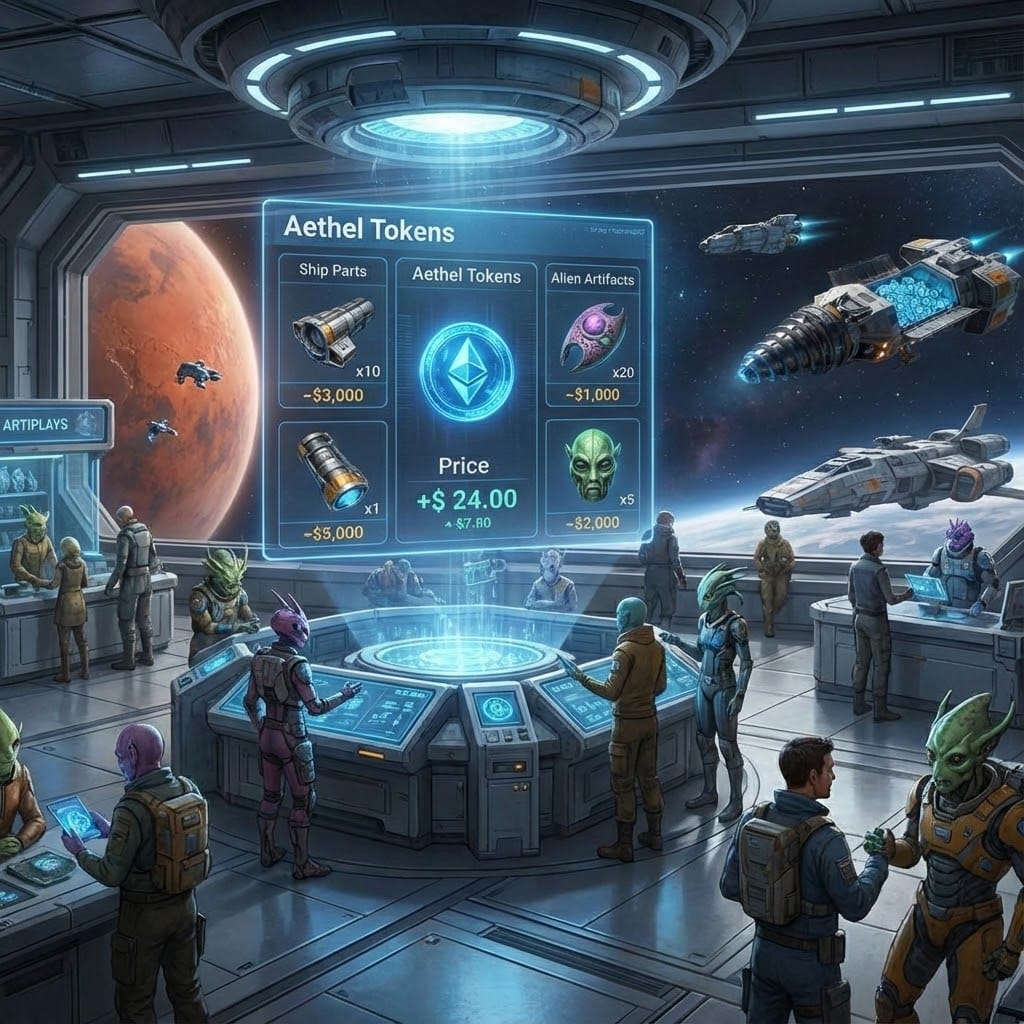
Is the game token a security? A galactic view
Summary: Designers of game economies need to think through every element of how their tokens enable the creation, exchange, and control of value. The choices they make will have legal implications.
Game designers need to think through all sorts of factors affecting the purpose, price, supply, and volatility of their in-game tokens. Many of these are fundamentally about making sure game play runs smoothly, that player engagement is encouraged, and that the game economy remains reasonably stable.
However, design choices made about the token can also have regulatory implications. Below, we provide a very high level and entirely non-exclusive checklist of tokenomics questions with legal implications. Game design, tokenomics, and regulations can merge in ways large and small. Founders must recognise this and act accordingly.
The key thing here is whether or not a token - regardless of if you think it is a utility token, a soft internal token, a governance token, or an NFT - may be considered to look like a security by a regulator. Fact patterns of the rights and returns these tokens can give tokenholders, as well as the language used to market and describe them, are of great importance.
- What is the primary purpose of the token? This may seem obvious, but designers need to work out what their token is actually for. Is it designed to facilitate game play, or to promote player engagement? Is it a medium of exchange within the game economy? Is it to be used for rewards, governance, or some sort of utility? Each of these has implications. As the game grows in popularity, these choices will have an impact on how the game evolves - and how regulators will view the game.
- What has been promised regarding the tokens? Based upon how the game is marketed to its community, do players reasonably expect that they can profit through acquiring the token, either by value appreciation, resale, or revenue? If so, it is likely that this token is a security under the Howey test.
- Are there any profit or revenue sharing features to the token? Can you gain revenue by owning the token? Are there for instance automatic redistributions of in‑game fees, transaction taxes, or treasury profits to token holders? If so, the token could look like a security.
- How decentralised is control over the game, the tokens, and the minting of tokens? The more decentralised it is, the less it looks like token holders are relying on the efforts of a central party to make a profit - and the less it therefore looks like a security.
- How are the tokens minted, and how is the total supply determined? Is the token to be fixed cap? Will it have an inflationary schedule or algorithmic rebasing, or on‑demand minting tied to gameplay events? This too has implications. If token supply is centrally controlled, the issuer may be holding ‘management authority’ over the token - and thus it may be deemed a security.
- What are the token burn or sink mechanisms? How do people spend the tokens and how can their numbers be reduced? If token burns are pre‑announced and tied to the token’s price (e.g., “we will burn 10 % of all tokens each quarter to support price”) a regulator may consider that token is being marketed as an investment vehicle whose value will be protected or enhanced by the issuer’s actions.
- How are tokens earned or acquired by players? Are they earned through in-game activities like quest rewards, world exploration, or PvP victories? Or do they come through other means like staking, liquidity provision, NFT sales, or external airdrops? When tokens are earned as a reward for participation and the expectation is that the token’s market price will rise because of that participation, the token can be seen as a profit‑sharing instrument.
- What is the relationship between the token and NFTs or any other in-game assets? Do NFTs generate token yields, require token staking, or perhaps act as “keys” to special zones within the game? If NFTs generate token yields - a land NFT generating ‘rent’ for instance, or mining revenue where it represents a gold mine - and these tokens can be exchanged externally, the NFTs can begin to look like a distribution right tied to underlying assets - a classic security characteristic
- Will token holders have voting or governance rights over the game’s development, treasury, or tokenomics? The scope of governance rights can tilt the analysis toward security, especially if voting can be used to influence treasury distributions or some other potentially revenue-related function.
- Who controls the token supply and distribution after launch? How decentralised is token supply and distribution to be? In many cases, the more centralised it is, the more likely it is to be deemed a security.
- Is the token tradeable and/or transferable on secondary markets? A critical question for designers is whether or not these tokens can be exchanged for other forms of value, like tokens or money. This will have a big impact on the internal economy of the game, encouraging ‘play to earn’ behaviors, and external speculation. This could drive volatility. More broadly, if investors can buy and sell the tokens in expectation of a profit, it begins to look more like a security, So too if the token price is driven more by speculation than its importance in the game.
The entity stack
The legal entities used by a project are highly important in determining the overall regulatory posture of the game, especially as regards decentralisation, DAO governance, and tax.
Entities: the crypto catamaran
Although every game is different, most Web3 gaming ecosystems rely on a three-entity model. We have dealt with this elsewhere as ‘the crypto catamaran’. We summarize this again below.
Entity 1: The Labs Company (“LabCo”)
This entity:
- May own elements of game IP, or may license it from the foundation
- Employs a development team
- Operates servers
- Handles marketing, partnerships, and distribution
- Often sits in a founder-friendly jurisdiction (UK, US, Singapore)
This entity is formally separate from the DAO / protocol wrapper. It neither owns nor is owned by the protocol wrapper entity. It will have contractual relationships with the protocol/DAO wrapper, and possibly also the token issuance vehicle. These will be service contracts, IP licenses - whatever makes sense for the project as a whole. In many cases, this entity is used to receive investment.
Decentralisation: The fact that this entity is separate to the protocol assists with the overall desire to demonstrate that the game is decentralised. Ultimately, however, it is important to remember that regulators will generally be applying ‘form over substance tests’; if, in fact, all power in the wider project and all power over the protocol & code is vested in the LabsCo, it may be tough to argue that there is no central control. Project leads must think carefully about this.
(B) The protocol and/or DAO wrapper (ProtCo)
This entity is designed to give the protocol legal personality, limited liability, and a path towards legal decentralisation. It typically is used to develop and promote the long-term health of the project. This may include activities such as:
- Holding treasury assets
- Granting tokens to players, partners, and contributors
- Stewarding the protocol and its codebase
- Stewarding long-term decentralisation
- Determining or influencing in-game rules, transaction fees, and the parameters of the in-game economy
- Giving real real-world legal effect to the votes of the DAO
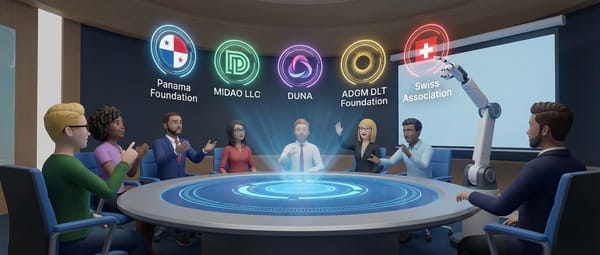
This entity will typically be a Cayman or Panamanian foundation, Swiss Association, or even a MIDAO LLC. Other entity types can be used as well, depending on the requirements.
This entity will own the token issuance vehicle and may own one or more additional subsidiaries. However, it does not own the LabsCo. Depending on the vision of the project and initial project leads, it may or may not be a DAO.
Relationship to the LabsCo: The foundation usually owns the codebase and grants open-source licences to the public, and a commercial licence to LabsCo to build, maintain, and interface with the protocol. The fact that the wrapper entity owns the protocol allows the LabsCo to be positioned as one contributor among many, even if it is initially dominant, helping validate claims to decentralisation.
Decentralisation: This wrapper entity is used to advance claims of decentralisation. It does this by (a) being separate to the LabsCo, (b) through the pattern of the interactions it has with the LabsCo and other service providers, (c) through the influence and interactions it has over the protocol itself. If it is a DAO, this goes a long way towards showing that control of the protocol is decentralised.
DAOs: A DAO wrapper enables real-world legal effect to the on-chain decisions of the DAO.
- Where the game protocol is to be governed by a DAO, it is important that a wrapper like this is used. If there is no DAO wrapper, then individual token holders may find themselves liable for anything that goes wrong with the game - a potentially catastrophic scenario.
- Depending on the type of DAO wrapper, human directors and managers of the wrapper entity will take actions and pass resolutions in fulfillment of the DAO’s wishes.
(C) The Token Issuer (“TokenCo”)
This entity is set up and owned by the protocol wrapper. It issues and manages tokens
- May conduct treasury assets
- May conduct operational activities
It is usually a BVI or Panama company, but other jurisdictions can work depending on customer needs and willingness to go through licensing processes.
These entities form the “triangle” of a legally robust Web3 ecosystem.

Tokens, tax, and jurisdictions
Being assets, tokens can be taxed. Entities issuing tokens, managing tokens, selling tokens, or getting capital gains from tokens will, depending on the jurisdiction that they sit in, be liable to the amount of tax. Indeed, this is also potentially influenced by where the controllers and owners of an entity are. Tax is a dense and complicated field of expertise, but at a very high level, tax authorities will typically look to see
- where an entity is based
- where effective management and control of that entity is based
- whether that entity is controlled by another entity, and
- whether or not the people behind two different entities overlap sufficiently that a tax authority may well choose to treat them together
Where you place your entity stack and who you choose to run it will be of material importance in determining the tax profile of your token sales and wider activities. Alongside securities laws, tax planning is a primarily reason why is it so important for the LabsCo to have an arm’s length relationship with the wrapperco
Governance: What Belongs in the DAO and What Does Not
If you do have a DAO involved in the game, it is worth thinking through what should and should not be held by the DAO entity. In Web3 gaming, decentralisation should be progressive, not immediate.
Your DAO should govern:
- token emission schedules
- marketplace fees
- staking parameters (if any)
- treasury allocations
- long-term economic direction
Your DAO should not govern:
- characters
- plot direction
- balance patches
- art
- community safety
- commercial negotiations
- hiring
Red flags for founders
As outlined above, there are many ways that your game design and legal structure can inadvertently cause you problems. Here are 4 of the biggest red flags.
- Tokens that are treated like investments: If QF is marketed as something that will go up in value, you risk securities classification
- Tokens that generate income rights: This holds for fungible tokens and NFTs. To a regulator, a token or a ‘Planet NFT’ that gives you revenue could look awfully like a share.
- DAOs with too much centralised control: If the DAO has no real autonomy, regulators view decentralisation claims as marketing, not reality. This will hit your regulatory profile, and your tax profile.
- Failure to separate LabsCo and TokenCo: If the same entity develops the game and issues the token, regulatory exposure greatly increases.
Final thoughts: a legally sound galaxy is a better galaxy
Web3 gaming showcases some of the most exciting opportunities opened up by blockchain - the creation of new markets, new property, new social forms, and new worlds online.
To make this work, a web3 game must combine its economic design with legal design. That legal design should think clearly through if, how, and when game tokens could be considered as securities. Alongside a securities analysis, it pays to get your corporate structuring right. Decentralisation helps mitigate the risk that the tokens are seen as securities; it also helps mitigate the chance that unexpected tax bills may accrue to project founders. In a culture that embraces risk, a little prudence can go a long way.
Interested in exploring hw best to design and structure a web3 game? Get in touch on contact@daospv.com