Crypto catamaran: why, when, and how to use the BVI & Cayman structure for token issuance

Slicing through the unpredictable seas of international crypto operations is a twin-hulled structure: the BVI tokenco & Cayman foundation. Think of it as the crypto catamaran - a speedy, stable, and durable machine through which to move your and your web project across the open waters of entrepreneurial life. It is a popular structure; indeed, it has has become an industry standard model for anyone seeking to launch a token, wrap a protocol, or set up a DAO.
This article explores why Cayman foundations are so often paired with BVI token launches, how the structure works, how it is used by DAOs, and how it can be used by web3 startup founders more broadly.
Why it has emerged
In a traditional startup, ownership is clearly defined - shareholders own the company, and the company creates shareholders by issuing shares. The company, in turn, acts through human directors and officers.
In web3, things are a little more complicated. Tokens tend to be at the economic core of a project, but they may or may not (and typically won’t) represent ownership of something, still less an individual company. Some tokens are there to provide utility within some sort of system, others provide governance rights, others may provide some sort of revenue or financial right, and others again exist merely to facilitate rambunctiously hyperactive & meme-fuelled speculation. Meanwhile, protocols - unlike companies - may operate autonomously, and for technical, regulatory, and philosophical reasons it is expected that control, ownership, and information flows are more or less decentralized.
This raises a set of questions
- Who “owns” a protocol?
- Who issues and who holds the tokens?
- What rights and liabilities does holding tokens create for individuals?
- Who is responsible for governance and treasury decisions?
- How are regulatory obligations met across jurisdictions?
- Bearing in mind your intentions for the above, how do you achieve any of them given current legal systems?
Failing to answer these questions, or answering them in the wrong way, can lead to very serious personal and corporate liabilities for you and your project. It's the equivalent of heading out to sea in a rubber dingy. You can get going, and things will work for a while - but if things go wrong, you're screwed.
This is where the BVI - Cayman structure comes in.
What is the BVI - Cayman structure?
The BVI - Cayman structure (aka, the crypto catamaran) has emerged as a gold standard means of legally & compliantly managing the needs of token issuers, DAOs, and protocols.
In brief, this structure involves setting up two or more corporate structures - a BVI company with which to issue and hold tokens, and a Cayman foundation that holds shares in the BVI company and is typically the director of the BVI company. Sometimes projects may also insert an additional operational company in between the token issuance company and the Cayman Foundation. An additional entity - formally outside the structure, but typically in a close contractual relationship with it - is an onshore ‘labs company’ or development company that actually writes the software of the protocol or dApp.
Combining the BVI and Cayman structures enables projects to have the benefits of both - a fast pathway to token issuance in the BVI, and the flexibility, protection, long-term stewardship, and independent operations that a Cayman foundation can provide. It also helps mitigate legal risks, by creating clear legal boundaries between token issuance and the activity of ongoing management.
Why are the Cayman Islands and the BVI used as web3 jurisdictions?
Those unversed in the special structuring needs of blockchain projects may have an additional question. Why, of all places, has attention focused on two tiny Caribbean archipelagos? Alongside the specifics of local VASP laws (and on that, more below), there are three general attributes that have made these jurisdictions so prominent in web3:
Legal innovation centres: BVI and Cayman are leading web3 and finance oriented jurisdictions. With several decades of experience as international finance centres, they possess deep pools of professional expertise. Being nimble and finance focused, they have also sought to rapidly adapt to the rise of web3, and to capture web3 business by developing favorable regulations and practices. The Cayman foundation was not designed for web3, but it is so highly customizable that it has become one of the most popular web3 structures.
English common law: As British Overseas Territories, the legal systems of both jurisdictions are based upon English common law. Alongside the benefits of the common law in terms of flexibility and predictability, common law is (a) standard in international finance and (b) written in English, the language of international commercial and cultural life. On both points, this makes it more accessible to international partners.
Tax neutral: The BVI and Cayman are both tax neutral jurisdictions, lacking many of the taxes seen elsewhere. Corporation tax, for instance, is 0% in both jurisdictions. This is useful for international web3 projects, enabling them to pool capital tax free before bringing it home and subjecting it to local taxes.
Activities of the entities
So - what actually is the structure, and what does each entity actually do? To return to our initial image, let’s think of it in terms of a catamaran.
Hull 1 - The BVI token issuance company: Issues tokens, manages the public and private token sales, receives revenue from token sales.
Hull 2 - The Cayman foundation: Works to uphold the long-term objectives of the project or protocol. Receives funds from the token sale, may receive token transaction fees, and may conduct treasury activities. May hold project IP, and may conduct a variety of activities, such as issuing developer grants. When used as a DAO wrapper, it provides real-world effect to DAO voting decisions.
The fancy deck - an (optional) second BVI layer: this carries out operational tasks, may hold IP, and may receive external investment.
The sail - The development company: this is formally separate to the structure, but it is likely to provide services and/or license IP from the Cayman foundation. This may include providing software support to the foundation, developing the protocol, building out the dApp, etc. It is particularly important in the early stage of the overall project, as this activity propels the overall structure forward.
Why is this structure useful?
The BVI and Cayman entity structure works (a) because the jurisdictions complement each other and (b) due to the unique attributes of the Cayman foundation.
In BVI, token issuance does not need a license: Unlike in Cayman, the BVI allows utility and meme tokens to be issued without needing to acquire a VASP license. Provided they fall under the right exemptions, it is also possible to issue security tokens there without a full securities license. By contrast, Cayman is not as flexible a place to issue tokens. Under Cayman regulations, all token issuances intended to raise money fall into the scope of the VASP regime and are required to be registered (ie, get a license), a process which takes months and may be expensive. By issuing tokens though the BVI entity, projects can therefore sort cut time to launch and reduce launch costs. For more info on the BVI token issuance regime, see our previous blog.
Complementary VASP regimes: Having issued tokens in the BVI, projects can then use the Cayman foundation for treasury activities. So long as the foundation is doing these activities on its own behalf, it does not fall in scope of Cayman VASP rules. See here for more info.
Flexibility: Cayman foundations are highly flexible. Foundation byelaws can be written in such a highly flexible manner, matching the diverse needs of projects. After formation, changing or updating the by-laws of the foundation is also possible, and comparatively easy compared to other structures such as Swiss foundations.
Decentralisation & ownerlessness: Cayman foundations can be rendered ‘memberless’ - that is to say, without owners. Instead, the foundation's activities will be carried out to the objects identified in the memorandum & articles, typically for the benefit of the token community and/or towards the aims of the project, as laid out in the foundation by-laws. Because the foundation is ownerless, this means it creates an orphan structure. This is very useful for projects seeking to become decentralised, because it:.
- Manages conflict between shareholder ownership and decentralisation: Without such a structure, ownership of the project must ultimately be for the benefit of particular organizations and individual, affecting claims of decentralisation. This is important on a philosophical level - it adheres to the wider pro-decentralisation goals of many web3 builders - and on a practical level, can help stop project leads from misusing their influence over the project
- Minimises regulatory & fiscal liability for project leads: If government authorities deem specific individuals to be the UBO (ultimate beneficial owner) of a particular web3 project, they may hold them liable for things the project does, or indeed for the profits earned by the project. This could lead to project leads receiving gigantic tax bills. If, however, a memberless foundation runs the project, then these risks are minimised.
Because the foundation company is the overall holding company for the project, this means that the entire structure - foundation, token issuance company, any other potential subsidiaries - is also orphan & ownerless.

What projects should use the BVI tokenco & Cayman foundation structure?
This structure suits a wide range of project types:
Layer 1 protocols: As the base network of a blockchain ecosystem, Layer 1 protocols need long-term and durable structuring solutions. Anything that affects the Layer1 could affect any l2 system and dApp built atop it. The BVI & Cayman structure is well placed to provide the long-term stability that such projects require.
Defi protocols: Decentralisation is especially important to defi projects; utilising the Cayman foundation + BVI tokenco structure is a great way to achieve this. Foundations can be used to provide overall ownership and governance to defi lending protocols, exchanges, and stablecoins. Typically, the front end to most defi projects is house in a different company, typically in Panama.
dApps: The Cayman/BVI entity works well for L1s and L2s systems - but also for smaller dApps. Issuing the token in the BVI means one probably doesn't require a license, and the foundation can be used to assist the overall tax position of the project.
Web3 games: Web3 games are as varied as the environments they describe. Nevertheless, the BVI and Cayman structure can be very useful. BVI companies can be used to issue utility tokens representing some sort of in-game value or privilege; they can also be used to issue DAO tokens. Use of the foundation, meanwhile, can ensure that this is kept properly decentralised
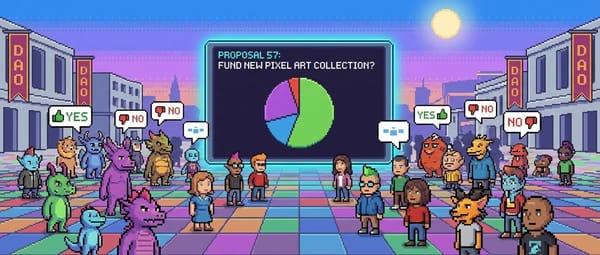
DAOs: Foundations have particular use as a key element within a DAO’s legal stack. Cayman foundations can be used to provide DAOs with legal personality and limited liability. By forming a Cayman foundation and requiring it to work in the interests of the DAO community and to carry out the instruction of the DAO, DAOs has a mechanism to interact with the off chain world.
How does it work?
- A foundation is set up. For projects seeking a memberless foundation, an independent board & supervisor will be appointed. The supervisor will have oversight over the board of the foundation, and typically will be the legally identified UBO for KYC purposes.
- The board of the foundation then sets up the BVI token issuance company, and owns it going forward. If the structure requires another company between the foundation and the tokenco, the foundation will also set this up.
- The BVI company issues tokens. These are variously provided to initial investors and offered to buyers. The nature, geography, and scope of the offering will vary according to the project, its needs, and who it is targeting.
- A portion of tokens issued by the tokenco are transferred to the foundation. The foundation acts the project treasury going forward.
- The foundation conducts activities to advance the overall vision of the project, protocol, and/or community, using its token-treasury to do so, operating through their independent board.
How do I set up the BVI / Cayman structure?
Simply contact us at DAO SPV, and we will be happy to assist you in setting one up and helping you to ensure it meets your needs.
FAQs
Can I launch a token without a wrapper?
Yes, but it comes with extremely high risks. It is possible to launch a token without a corporate wrapper - thousands are launched from personal wallets every day. So too is it possible to run a protocol or a DAO entirely on-chain and without any form of legal structure. In both cases, however, this can create all kinds of operational, regulatory, and fiscal liabilities, usually that you will be personally liable to pay tax on the proceeds of any sale whatsoever.
Can I issue tokens from the BVI without a VASP license?
Yes. BVI VASP regulation requires VASP activities to be licensed, not the act of issuing a token itself. VASP activities may mean offering VASP services to other people. Here is more information. To go ahead you need a legal opinion to make sure you aren't doing any VASP activities (or, indeed, triggering SIBA obligations) and then you can go ahead and issue tokens.
Why should I use a Cayman foundation with my BVI token issuance company? If you own the BVI entity directly, or control it, you will likely cause it to be a tax payer in your home country and need to pay tax on the proceeds of the token sale, and you may well have regulatory requirements in your home jurisdiction as well. There are also many other benefits in terms of providing long-term stewardship , segregation of activities, and the potential this structure provides for decentralisation. See above.
Can I set up the BVI token company and issue tokens without the foundation?
Yes, but as noted above this approach is likely to create a number of potential tax issues. If you, or a company held by you, directly own and control the BVI company, your jurisdiction of residence is likely to deem it as a local company for tax purposes. This could create large personal liabilities with no statute of limitations. DAO SPV can introduce you to local and international tax specialists for further advice on this point.
Can I set up the foundation and use it to issue SAFTs before I actually set up the BVI tokenco? Yes, this is possible but you’ll need to make sure you structure the SAFTs right and make sure they are novated to the tokenco before you start issuing. DAO SPV can intro you to local lawyers who can assist you with this, but the cost of incorporating a BVI entity is usually much less than novating a set of SAFTs.
I want to save money. Can I be director of the Cayman foundation and BVI tokenco?
Yes. Both jurisdictions allow offshore directors. However doing it yourself may affect the regulatory positioning of the project, impacting its local substance and the degree to which local tax authorities will regard these entities are separate to you. We suggest you seek legal advice first; DAO SPV would be happy to intro you to a good lawyer.